In 2021 the useful signal was speed. In 2027 the useful signal is stress. Time-on-market warnings, price pullbacks, failed first listings, and quiet demand avoidance are how Colorado inventory tells you who needs a new agent. This is the chapter of Market Intelligence to read before you write another postcard.

Why X&W leads the 2027 glossary
A “hot DOM” cluster still exists. It is no longer the default Front Range story. NAR’s national tape is stable sales, mid-6s rates, 4.6 months of supply, and pending contracts that fade when the 30-year tags a local high. Colorado single-family can still feel tight. Colorado attached often does not. Blended “the market is fine” language hides the houses that already tried to sell and failed.
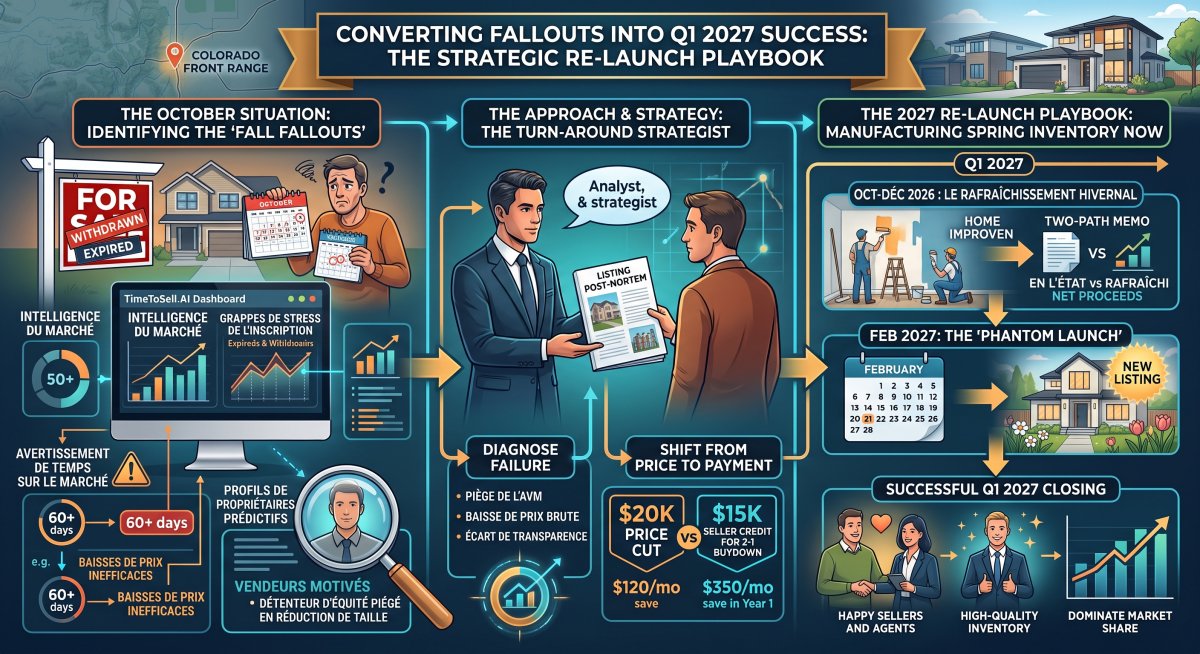
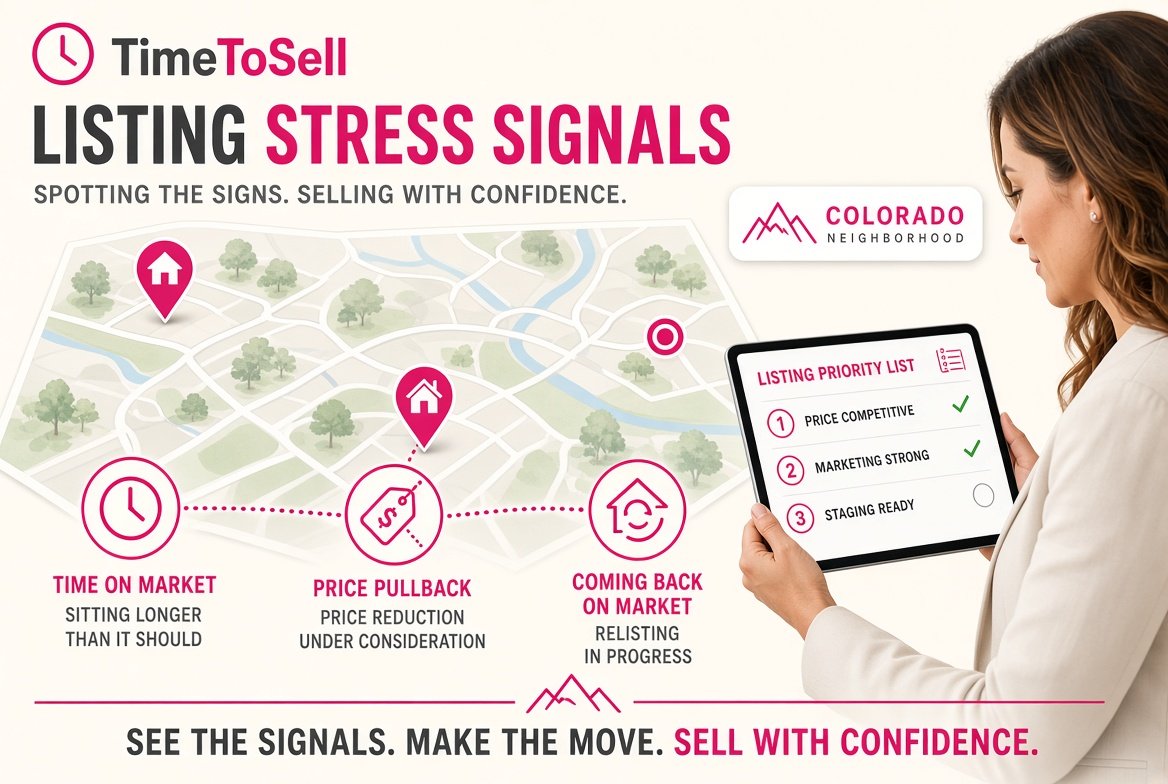
Those failures are not random. They cluster. TimeToSell’s daily and weekly Market Intelligence already prints them as Listing Stress / X&W clusters—Listing Reattempted, Time on Market Warning, Price Pullback Before Withdrawal, Demand Avoidance—by city, zip, and neighborhood. Northern Colorado and selected metro corridors have been loud. That is a farm map, not a curiosity.
The four signals, used as conversations
Time On Market Warning. Expired or withdrawn after a long first attempt. The first strategy failed. Your opener is not “I can do better photos.” It is “the plan was wrong; here is a different one.” Bring a DOM-by-comp exhibit from the last 90 days, not a brand deck.
Price Pullback Before Withdrawal. They already cut. They still left. That owner will hear a net-sheet conversation and will not hear another “let’s just relist at the old number.” Pair with the buydown menu so the next price is a payment story.
Listing Reattempted. They are back. Motivation is not the question. Strategy is. Read what changed: price, photos, comments, days. If nothing material changed, you have a listing presentation. If the price dropped into a new band, you have a timing window.
Demand Avoidance. Decent photos, still dead. Price or access or condition is the real object. Do not sell them a new flyer. Sell them a diagnosis.
The field definitions live in Playbook Part 3. This post is the operating order: stress first, trophy “hot market” second.
How to work a cluster on a Territory Farm
- Open the latest daily MI. List the zips that printed X&W. Four Places cards on that report already deep-link the neighborhood on Homendo—use them. You are talking about a place, not a spreadsheet.
- If you hold the seat, filter the Priority List to that farm. Star the addresses whose score jumped or whose profile matches the cluster (tired landlord, renovator’s remorse, heir).
- If you do not hold the seat, check Open Slots. A cluster in a community you already know is the cheapest argument for claiming it.
- Turn Email ON for that farm. A reattempt should not be something you notice on Friday because a neighbor mentioned a new sign.
TimeToSell will not replace your CRM. It will tell you which row in the CRM is worth Tuesday morning. That is the listing-advantage layer described on For agents.
What not to do
- Do not mail the whole zip because one cluster printed. That is 2014 farming with a nicer dashboard.
- Do not promise cash to a pullback seller. Cash is no longer the market’s club. Read why.
- Do not use a single Denver median on an attached listing that has been sitting 60 days. Two books.
Pairing stress with profiles
X&W tells you the listing is in trouble. Profiles tell you why the owner might try again.
- Pullback + long tenure + high equity → downsizer who overshot the first ask.
- Reattempt + LLC + 12–18 month hold → flipper who missed the window and now needs velocity.
- TOM warning + out-of-state mailing address → heir who hired the wrong first plan.
- Demand avoidance + old roof / insurance flag → uninsurable or “as-is” conversation.
Those pairings are why the Playbook keeps the 2024/2025 profile essays. The archetypes did not expire. The climate around them did. Climate briefing: 2027 rate regime.
A weekly cadence that matches the tape
Monday: Priority List, cluster zip first. Tuesday–Thursday: conversations, not door-drops to strangers. Weekend: which Open Slot you still owe yourself. The graphic in Playbook Chapter 14 is the same cadence on purpose. Stress signals are what fill the Monday list.
When offered, COLORADO-100 on the first seat. The listing that already failed once is the listing that will pay for the seat if you are the second plan—not the fifth flyer.
A worked example without fake addresses
Suppose Monday’s MI prints Denver 80216 Swansea as Time On Market Warning and Castle Rock 80104 Castlewood Ranch as Price Pullback Before Withdrawal. You hold one of those farms. You do not hold the other.
On the farm you hold: filter Priority List to that zip. Star owners whose score is Prime or Strong and whose profile is compatible with a failed first listing—long tenure, high equity, LLC, out-of-state mail. Draft three conversations: diagnosis, not announcement. “The first plan assumed 2022 demand. The last 90 days in this zip did not. Here is a different plan.” Attach two nets.
On the farm you do not hold: open Open Slots. If the seat is free and you already know the HOA, that cluster is the business case. If the seat is taken, do not poach. Work your own streets. Exclusivity only compounds if you respect it.
Wednesday, check notifications. A starred address that jumped a band is the call before lunch. Friday, write one paragraph in the CRM: what the cluster did to your week. That paragraph is how a team lead audits whether MI is a toy or a desk.
Do this for four weeks. You will have a better sense of 2027 listing work than another year of reading national medians. The Playbook is the doctrine. The cluster is the assignment. The seat is the permission.