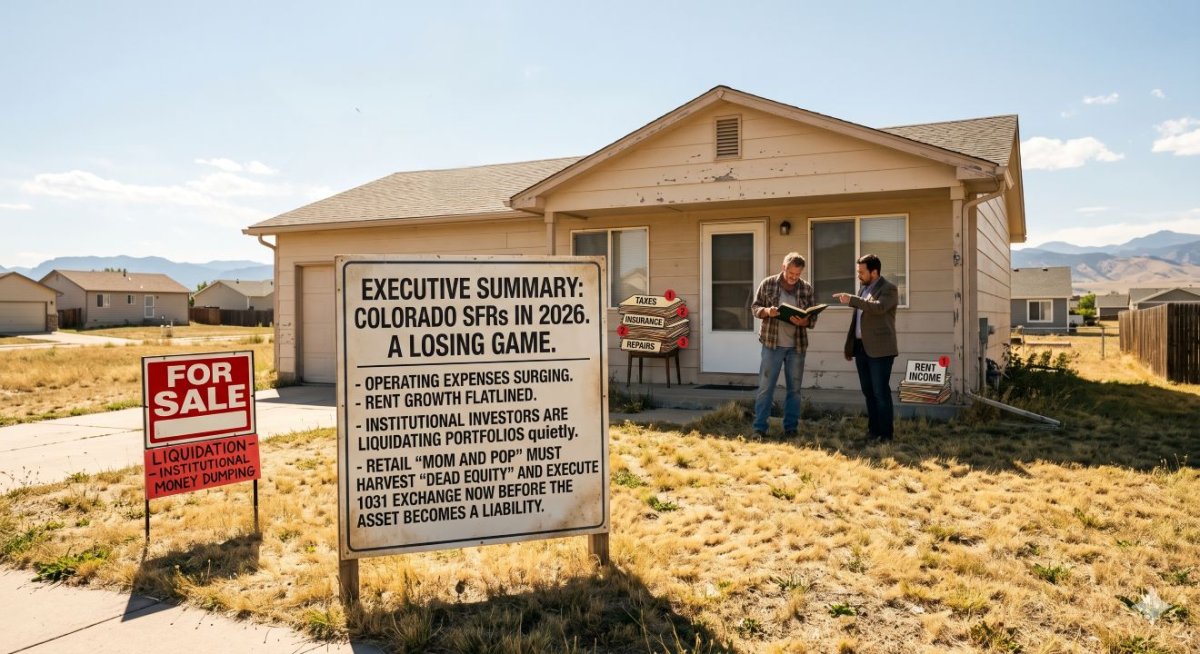

Executive Summary: October in Colorado brings the first chill to the air, and for a specific class of property owners, that chill brings pure anxiety. Absentee owners, operators of struggling Short-Term Rentals (STRs), and aging investors in mountain corridors (like Summit, Eagle, and Routt counties) as well as the Front Range are looking at the calendar with dread. They are facing months of snow removal, the risk of frozen pipes, skyrocketing winter utility bills, and the headache of remote property management. We call this emerging Q4 profile the "Winter Liquidator." This 800+ word strategy guide reveals how to use TimeToSell.AI to spot these distressed absentee owners in October and broker highly lucrative, off-market 1031 Exchange deals before the heavy snow flies.
1. The Catalyst: The Death of the "Easy" STR
From 2020 to 2022, buying a second home or an Airbnb in Colorado felt like printing money. Remote workers and vacationers flooded the market, masking the true operational costs of managing these properties. By late 2026, the party is decisively over.
The Investor Exit Wave is hitting the absentee owner community particularly hard. They are battling a perfect storm of profitability killers:
- Regulatory Crackdowns: Strict new STR licensing laws and occupancy limits in major Colorado municipalities have crushed revenue projections.
- The Insurance Spike: Non-owner-occupied and commercial dwelling insurance policies in fire-prone or high-altitude zones have tripled. (See Insurance & HOA Shocks).
- Maintenance Inflation: Paying a local property manager or finding a reliable contractor to fix a boiler in January from 1,000 miles away is exorbitantly expensive and highly stressful.
When Q3 revenue numbers fail to cover the impending Q4 holding costs, the absentee owner shifts from "passive investor" to highly motivated seller. They want out before the first major blizzard.
2. Identifying the "Winter Liquidator" with Predictive AI
You cannot find these sellers by knocking on doors, because they don't live there. You must use data.
Open your TimeToSell.AI dashboard and apply the following filters to your Territory Farm:
- Absentee Owner Flag: Filter for properties where the tax mailing address differs from the property address, specifically targeting out-of-state zip codes (e.g., Texas, California, Illinois).
- Profile Match: Look for the
TIRED_LANDLORDorINVESTOR_LIQUIDATIONtags. - Tenure & Equity: Focus on owners who have held the property for 4 to 8 years. They have sufficient equity to exit cleanly but are likely exhausted by the operational drag.
3. The October Outreach Strategy: The "Asset Optimization" Audit
When you contact the Winter Liquidator, you must speak the language of finance, not emotional real estate. Do not send a postcard of a snowy cabin. Send a professional Asset Performance Briefing via FedEx to their primary residence.
The B2B Script
"Dear [Owner Name], as a real estate advisor specializing in [Colorado City/County] investment properties, I am tracking a significant shift in Cap Rates for non-owner-occupied assets in our market.
"Between recent regulatory changes and the rising costs of winterization, insurance, and remote management, many out-of-state owners are realizing their Return on Equity (ROE) has dropped below 3%.
"Before we enter the high-liability winter maintenance season, I am offering a complimentary 'Hold vs. Sell' financial audit. We can explore whether it makes strategic sense to harvest your accumulated equity now and execute a 1031 Exchange into a truly passive, zero-maintenance commercial asset closer to home. Let's schedule a 15-minute zoom call to review the math."
4. The Execution: The Off-Market Investor Swap
When the out-of-state owner agrees to sell, they usually have one major request: "Please don't make me fly out there to manage repairs or deal with my current tenants/STR bookings."
This is your opportunity to play Market Maker. You execute the Turnkey Liquidation Path.
Instead of listing the property on the MLS (which requires professional photography, staging, and vacating the property), you market the asset directly to your network of local, capitalized investors or second-home buyers who are looking for a deal. You sell the property "As-Is," fully furnished, or with the existing lease in place.
The seller takes a slight discount on the retail price in exchange for speed, absolute certainty, and zero physical effort. They avoid the dreaded winter holding costs, and you secure a smooth, fast closing to pad your Q4 revenue.
5. The 1031 Exchange Multiplier
Remember, the Winter Liquidator is an investor. If they sell a highly appreciated asset, they face massive capital gains taxes. You must guide them toward a 1031 Exchange.
Partner with a Qualified Intermediary (QI) and present the seller with options for Delaware Statutory Trusts (DSTs) or Triple-Net (NNN) commercial properties. By solving their tax problem and moving their "dead equity" into a truly passive income stream, you elevate yourself from a local transaction coordinator to a national wealth advisor. (See our guide on The Portfolio Upgrade).
Conclusion: Harvest the Season
The changing of the seasons is a powerful psychological trigger. While other agents are winding down for the holidays, elite agents are using the impending threat of winter to force decisions from exhausted absentee owners. Use the predictive data available in TimeToSell.AI to locate the Winter Liquidators in your market today, and build your Q4 pipeline out of their desire for a hands-off lifestyle.
Ready to track down the absentee owners in your market? Log in to TimeToSell.AI and filter your Priority List for non-owner-occupied properties holding massive equity today.